
BECATUR
Designing an Inclusive Digital Reservation Experience for Traditional Becak
An academic research project connecting travelers and traditional becak drivers through a two-sided reservation prototype.
A validated high-fidelity prototype; SUS increased from 70.66 to 82.5 for travelers and from 67.75 to 81.25 for drivers.
- Organization
- Academic research project
- Role
- UI/UX Designer and UX Researcher
- Timeline
- November 2024–March 2025
- Status
- High-fidelity prototype — not launched
- Contribution
- Research and design were completed with one equal UI/UX design partner.
- 0179 research participants
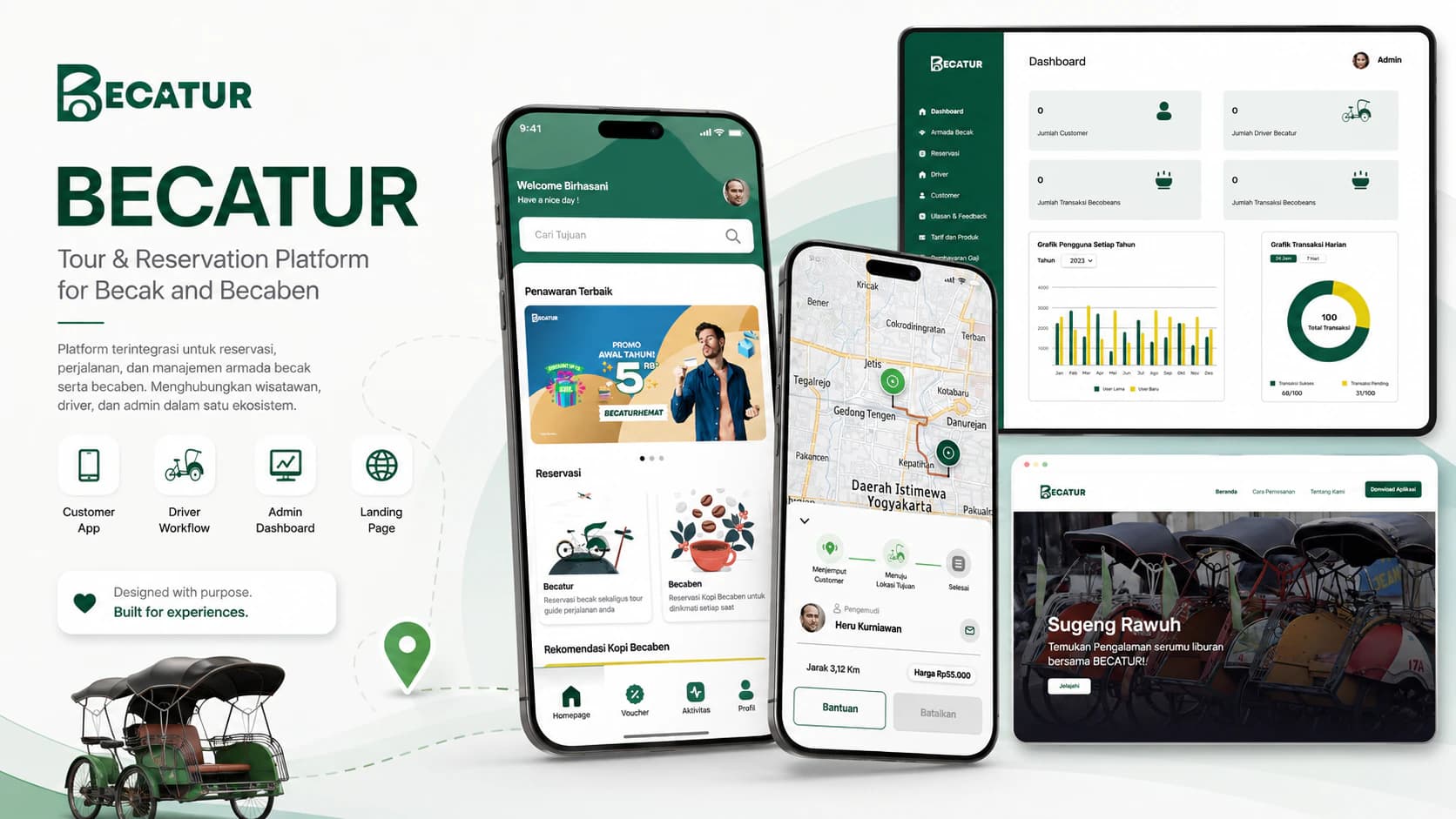
- 02More than 200 mobile screens and states
- 03Two usability-testing iterations
Project context
A two-sided reservation challenge
BECATUR explored a digital reservation experience connecting travelers with traditional becak drivers. Because the service involved two roles, the product scope had to account for both the customer side of a reservation and the driver side of fulfilling it.
This was an academic research project developed from November 2024 to March 2025. Its outcome was a high-fidelity prototype, not a launched or publicly operational product.
My role and collaboration
Research and design completed as equal partners
I worked as a UI/UX Designer and UX Researcher with one equal UI/UX design partner. The research, synthesis, product structure, interface work, and usability-testing iterations were shared work.
The collaboration is credited as an equal partnership; this case study does not present the research or design as sole-authored.
Research and evidence
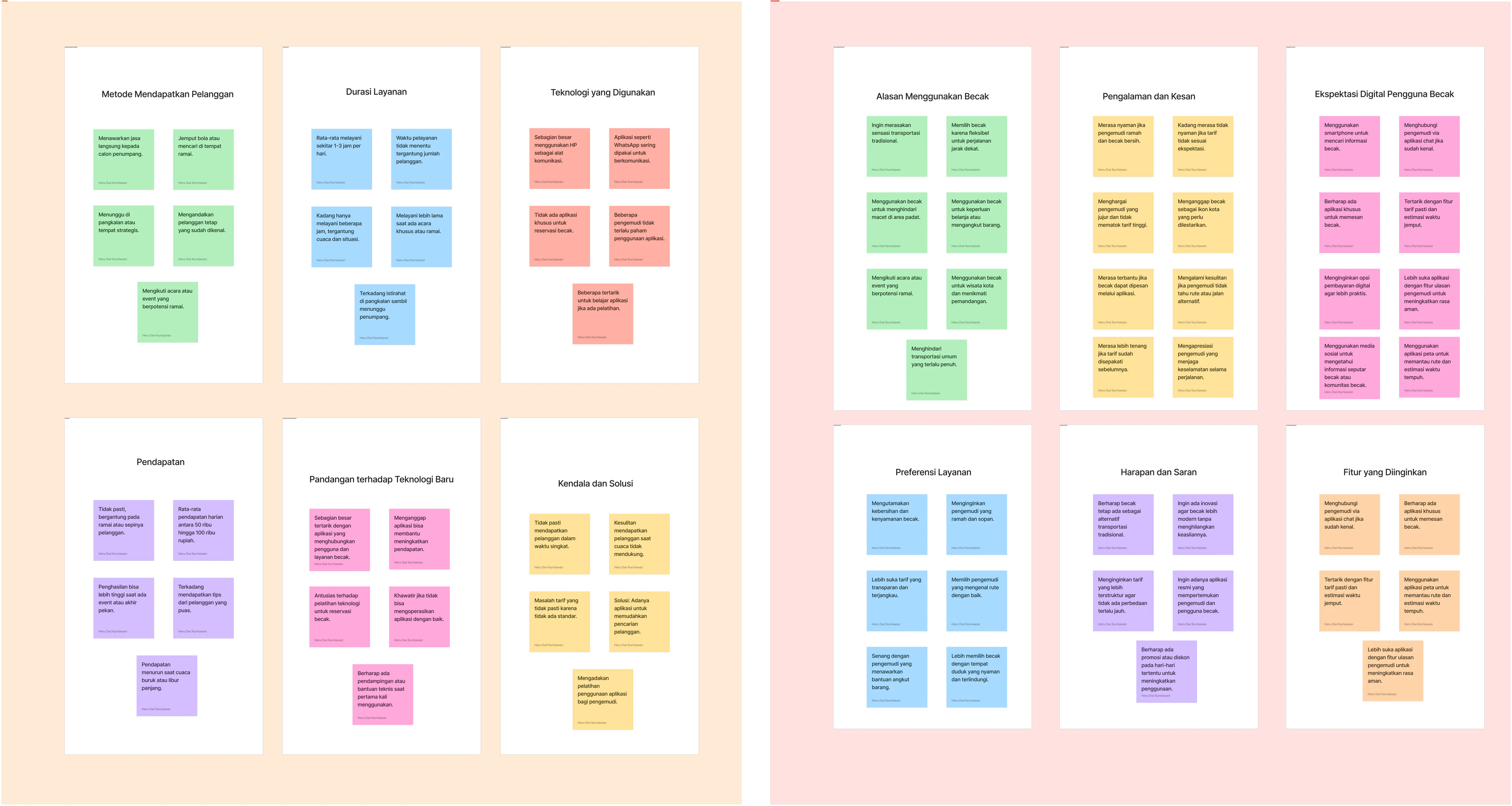
79 participants across two cities and two user groups
35 travelers
Traveler research participants in Surabaya and Yogyakarta.
44 becak drivers
Becak-driver research participants in Surabaya and Yogyakarta.
79 total participants
Evidence was gathered across both sides of the proposed service.
Two locations
The research covered Surabaya and Yogyakarta.
Research synthesis
Evidence before interface decisions
Two user perspectives
Different roles required different product paths
Traveler perspective
The customer mobile application represented the traveler side of the reservation experience.
Driver perspective
The driver mobile application represented the becak-driver side of receiving and fulfilling the service.
Shared service
Both roles needed to connect through the same reservation concept while retaining role-specific flows.
Operational oversight
A separate administrator website extended the product scope beyond the two mobile applications.
Research to prototype
Moving from evidence into a testable product
- 01
Research both roles
Engage 35 travelers and 44 becak drivers across Surabaya and Yogyakarta.
- 02
Structure the service
Define separate customer, driver, and administrator experiences.
- 03
Build the prototype
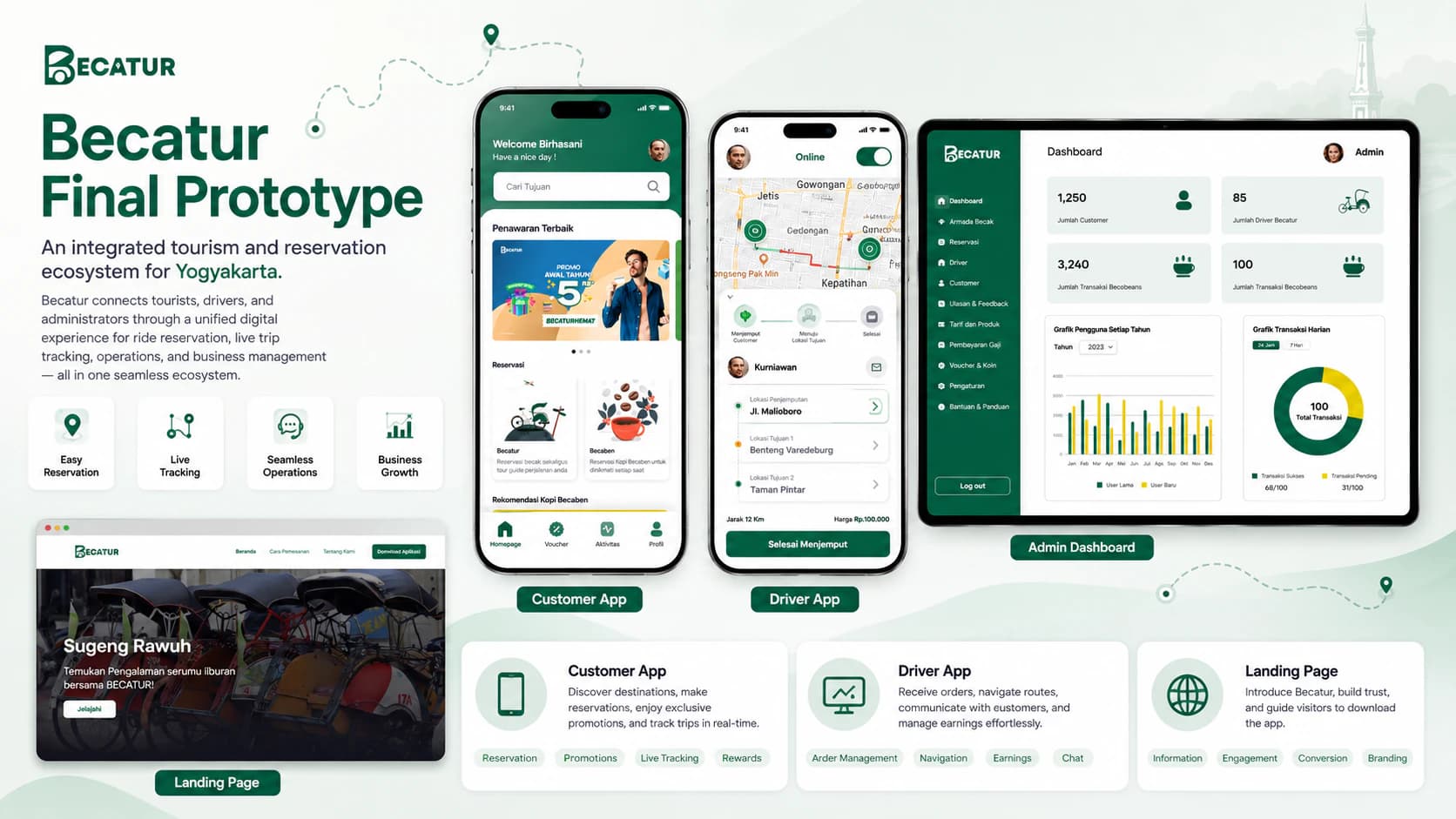
Create more than 200 mobile screens and states, a 45-screen administrator website, and a one-page informational website.
- 04
Test and iterate
Run two usability-testing iterations using SUS and SEQ.
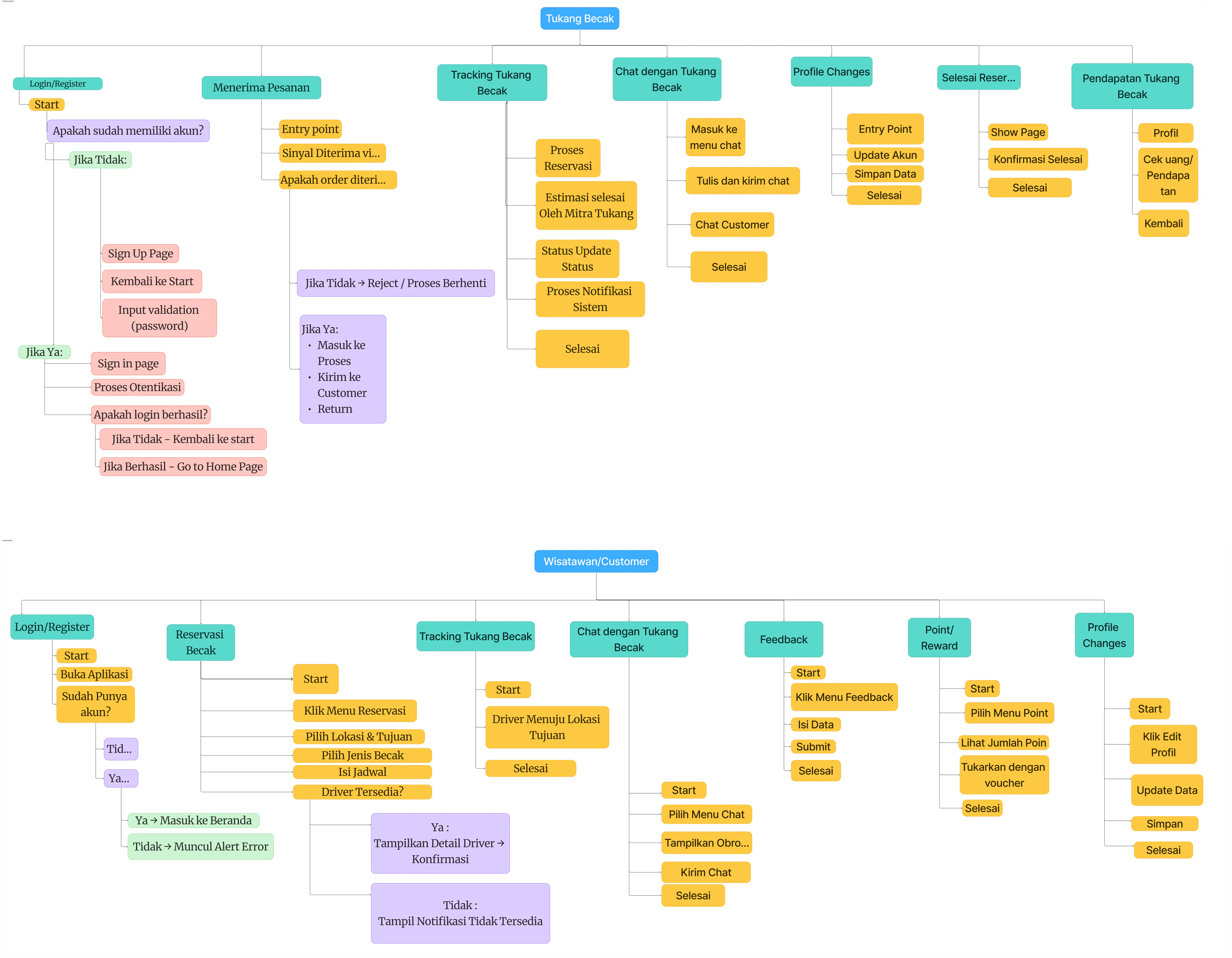
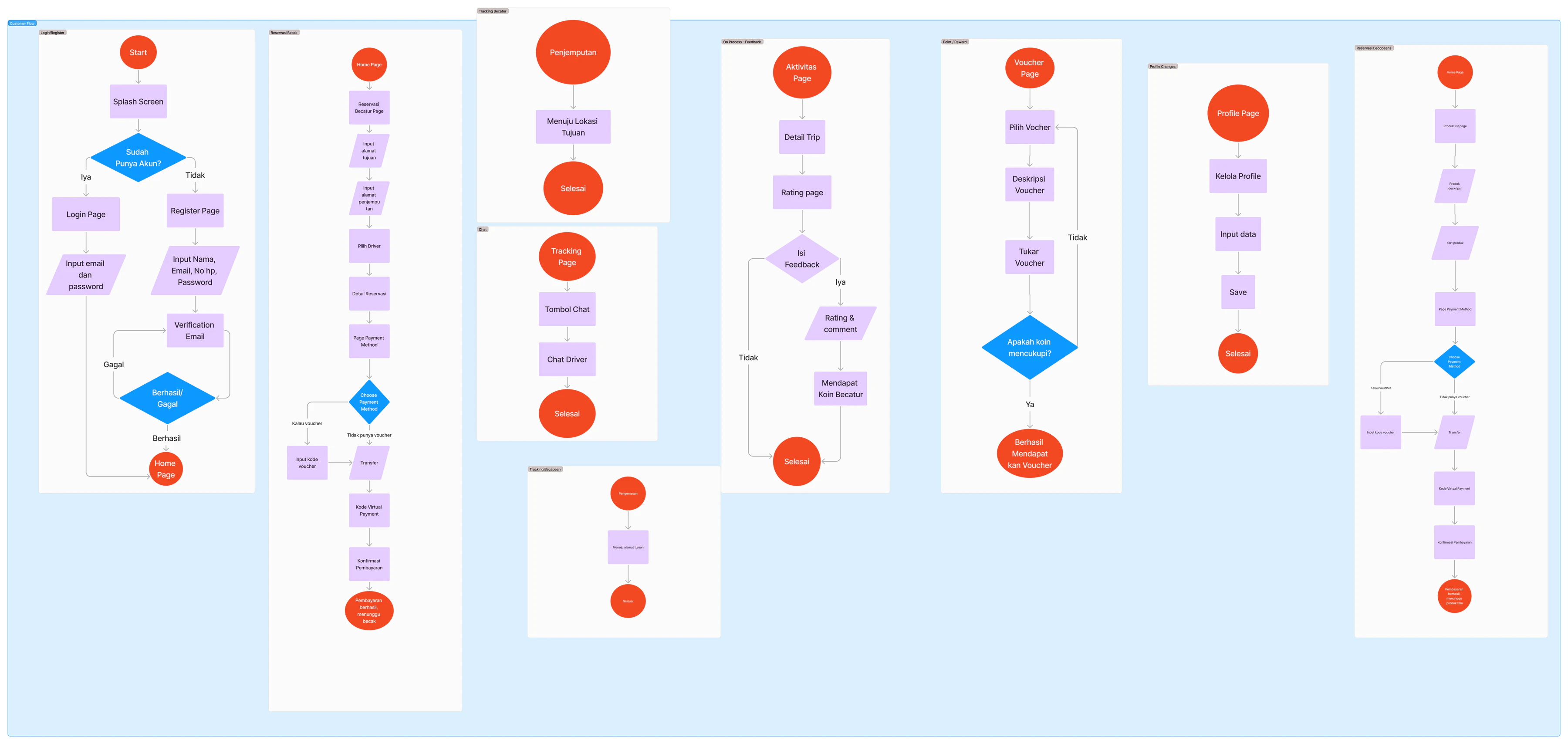
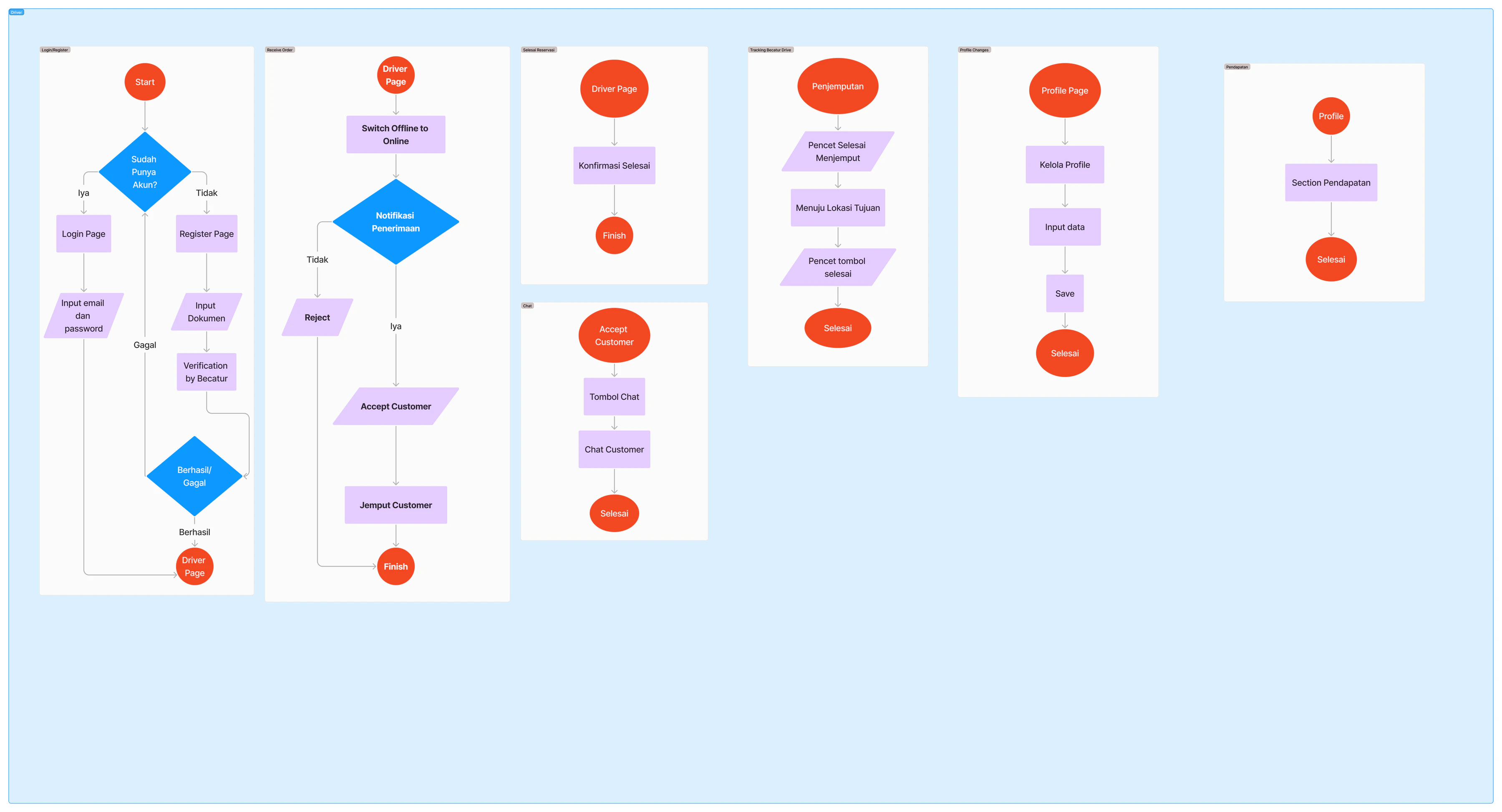
Customer user flow
Structuring the traveler-side reservation experience
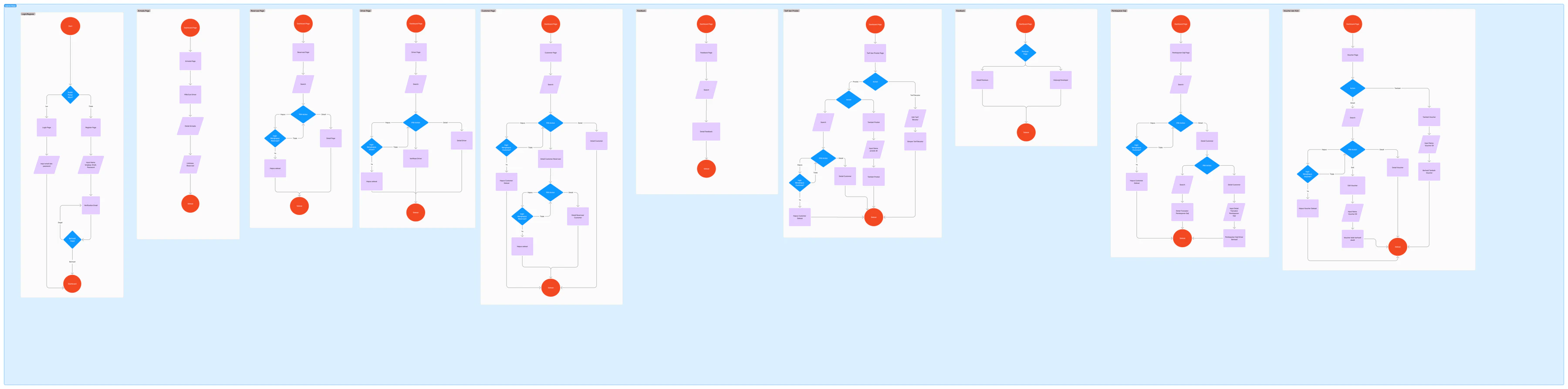
Driver and administrator flows
Structuring service delivery and operational oversight
Design exploration and decisions
Keeping role-specific experiences connected
The product was divided into a customer mobile application and a driver mobile application, supported by a separate administrator website and a one-page informational website.
This structure allowed each role to follow a distinct path while remaining part of the same reservation concept. Detailed visual claims are deferred until approved assets are available.
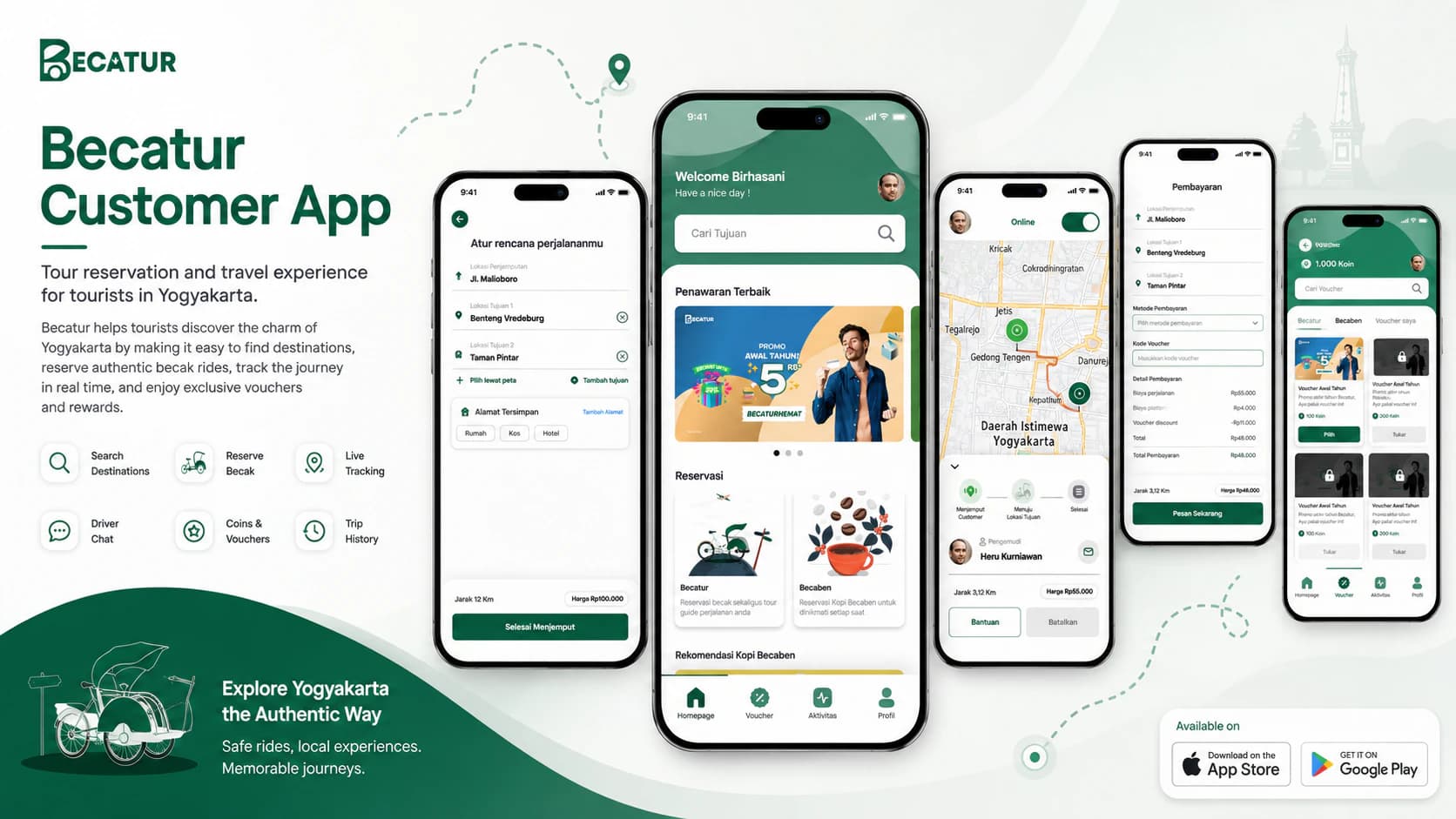
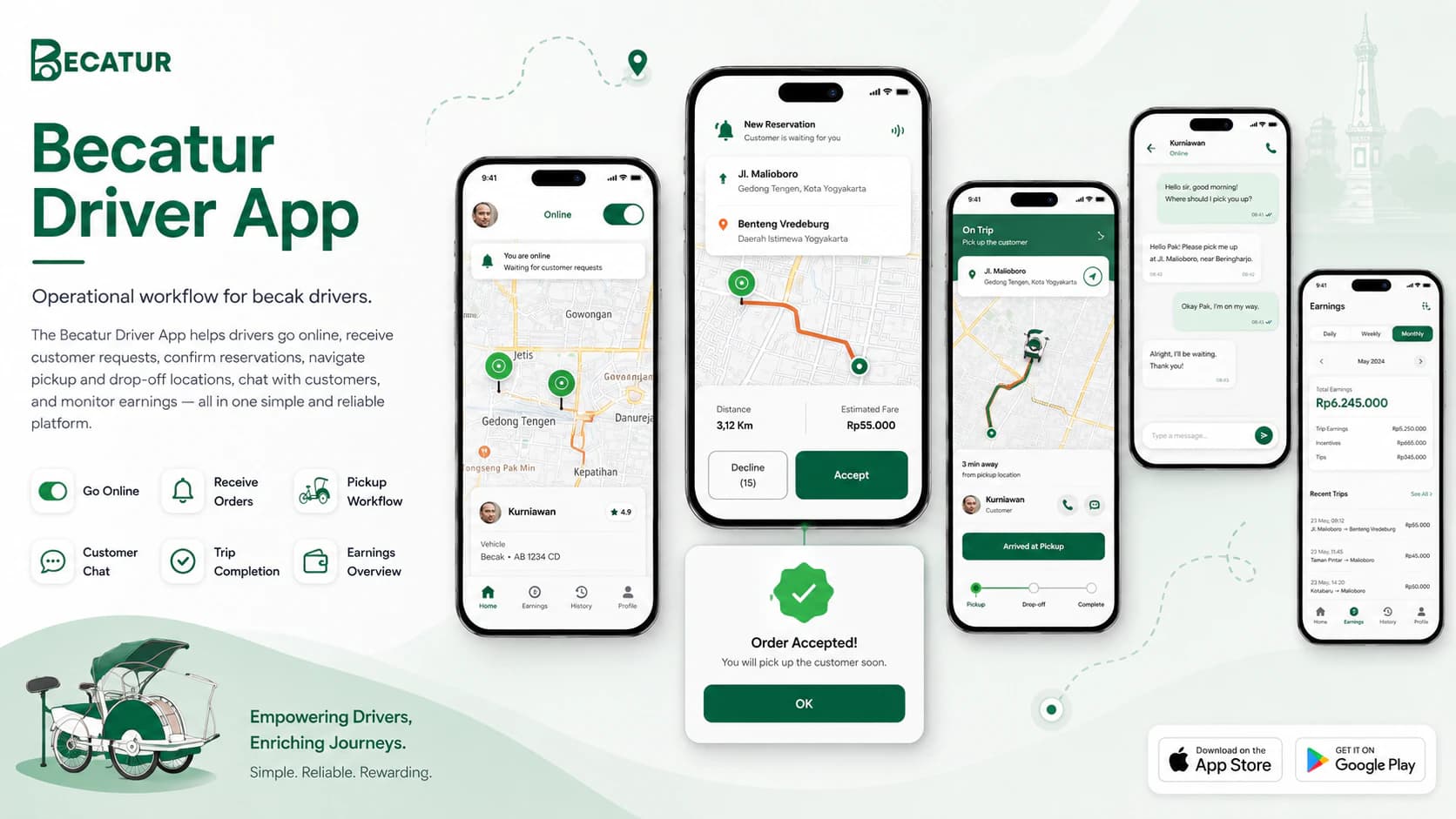
Mobile applications
More than 200 screens and states across customer and driver experiences
Complete product scope
Designing beyond the two mobile applications
Customer application
A mobile experience for the traveler side of the reservation concept.
Driver application
A mobile experience for the becak-driver side of the service.
Administrator website
A separate 45-screen administrator website.
Informational website
A one-page informational website.
Usability testing
SUS improved for both user groups across two iterations
Travelers
Increase of 11.84 points
Iteration 1: 70.66Iteration 2: 82.5
Becak drivers
Increase of 13.50 points
Iteration 1: 67.75Iteration 2: 81.25
Both usability-testing iterations used SUS and SEQ. Numeric scores are shown directly so the comparison does not depend on color.
Final solution
A validated high-fidelity academic prototype
Project status
Validated through testing, but not launched
The outcome was a high-fidelity academic prototype supported by two usability-testing iterations. It was not launched, adopted, or publicly operational.
The completed scope comprised more than 200 mobile screens and states, a 45-screen administrator website, and a one-page informational website.
Validated outcome
Measurable improvement within the prototype testing context
Traveler SUS increased from 70.66 in the first iteration to 82.5 in the second. Becak-driver SUS increased from 67.75 to 81.25.
These results describe prototype usability testing only. They do not indicate market adoption, public operation, or production performance.
Reflection
Designing one service through two distinct perspectives
What I learned
Working with 35 travelers and 44 becak drivers reinforced the importance of examining both sides of a service before defining the interface. Equal-partner collaboration helped carry the research into separate customer and driver flows without presenting either role as the whole system.
What I would do next
A future phase would need to validate the service beyond a high-fidelity prototype before making any claim about launch, adoption, or public operation. Further work should continue testing both roles and the administrator experience in their distinct contexts.